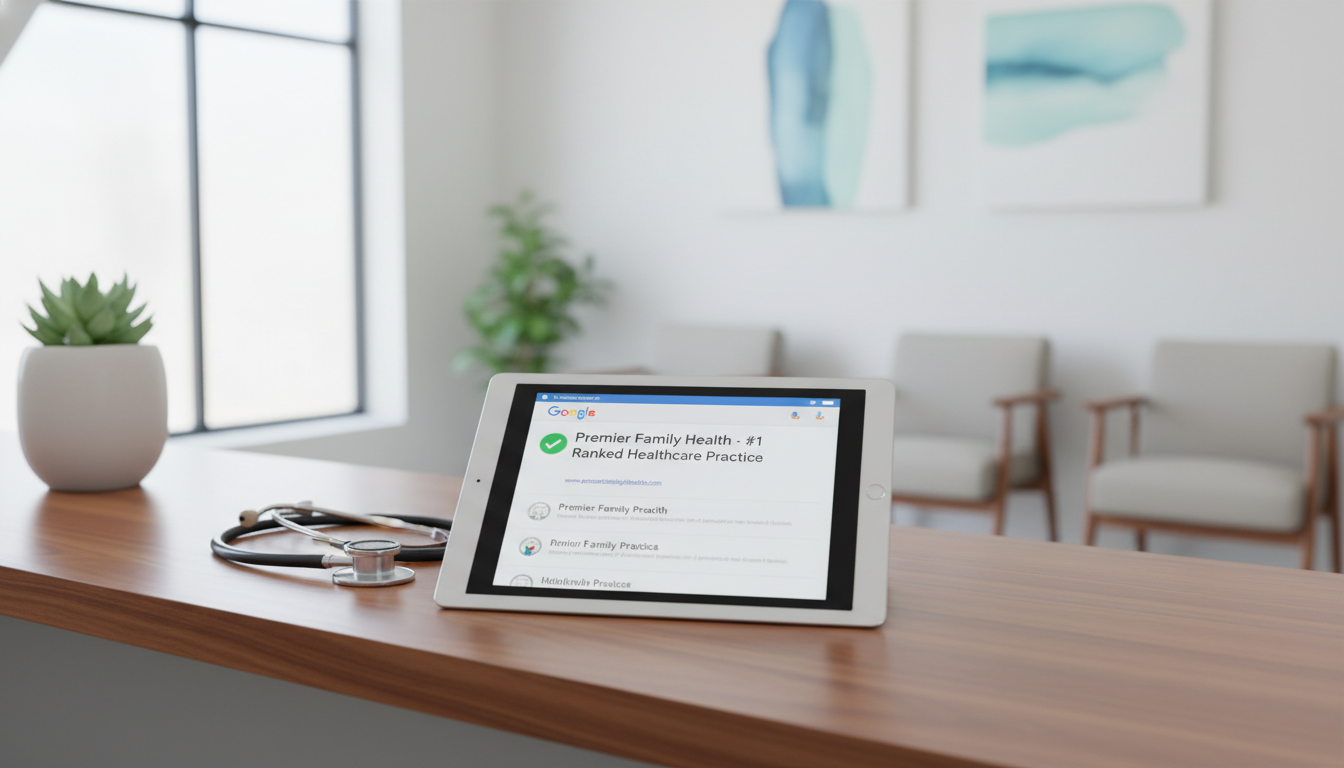
Healthcare practices live and die by local search. When someone has a health concern, they search for a provider near them, and they almost always choose from the first few results. If your practice does not appear in the local map pack or the top organic results for your specialty and city, you are invisible to the patients actively looking for you.
This guide covers everything a healthcare practice needs to do to dominate local search in 2026.
Why Local SEO Matters More for Healthcare
Healthcare is a Your Money or Your Life (YMYL) category in Google’s quality guidelines. This means Google applies stricter quality standards to healthcare content and listings than it does to restaurants or retail stores. The bar for ranking is higher, but the reward is also higher. A top-3 map pack position for a healthcare keyword in a mid-size city can generate 50 to 200 new patient inquiries per month.
Local searches also have the highest intent of any search type. Someone searching “dentist near me” or “chiropractor in [city]” is ready to book. Unlike informational searches where people are browsing and comparing, local healthcare searches convert at rates that make paid advertising look expensive by comparison.
Google Business Profile: The Foundation
Your Google Business Profile (GBP) is the single most important ranking factor for local healthcare SEO. It determines whether you appear in the map pack, what information patients see, and how Google categorizes your practice.
Getting the Basics Right
Primary category — Choose the most specific category available. “Chiropractor” is better than “Health and Wellness.” “Pediatric Dentist” is better than “Dentist.” Your primary category has more ranking weight than any other GBP field.
Secondary categories — Add every relevant secondary category. A chiropractor might add “Sports Medicine Clinic” and “Physical Therapy Clinic” if they offer those services. These help you appear in a wider range of related searches.
Business description — Write a description that naturally includes your key services and service area. Do not stuff keywords. A clear explanation of what you do, who you serve, and what makes your practice different is more effective than a list of keywords.
Photos and videos — Practices with 20+ photos on their GBP listing consistently outrank practices with fewer. Upload photos of your office, your team, your treatment rooms, and your equipment. Video tours of the practice perform particularly well.
GBP Posts and Updates
Post to your GBP at least once per week. These posts appear directly in your listing and signal to Google that the business is active. Effective post types include:
- New patient specials or seasonal offers
- Staff introductions or credentials
- Health tips related to your specialty
- Community involvement and events
Each post should include a call to action (Book Now, Learn More, Call) that links to a specific page on your website.
Citation Building for Healthcare Practices
Citations are mentions of your practice name, address, and phone number (NAP) on other websites. For healthcare practices, the citation strategy goes beyond basic business directories.
Healthcare-Specific Directories
General directories like Yelp, Yellow Pages, and BBB matter, but healthcare-specific citations carry extra weight:
- WebMD — Provider directory listings
- Healthgrades — One of the highest-authority healthcare directories
- Vitals — Patient review and provider search platform
- Zocdoc — Appointment booking platform with strong SEO authority
- RateMDs — Doctor review aggregator
- Your state medical board — Licensing verification pages
NAP Consistency
Every citation must match your GBP listing exactly. “123 Main Street Suite 200” and “123 Main St Ste 200” are different enough to create confusion for Google. Pick one format and use it everywhere.
For multi-location practices, each location needs its own GBP listing, its own set of citations, and its own dedicated landing page on the website.
Review Strategy That Complies with HIPAA
Reviews are the second most important local ranking factor after your GBP listing. But healthcare practices face a unique constraint: HIPAA.
What You Can and Cannot Do
You can ask patients to leave a review. A simple “We would appreciate it if you shared your experience on Google” is compliant.
You cannot respond to reviews in a way that confirms someone is a patient. Even saying “Thank you for being a patient” in a review response technically acknowledges a patient relationship, which is protected health information.
Safe review response template:
“Thank you for taking the time to share your feedback. We are glad to hear about your positive experience and look forward to continuing to provide excellent care.”
Notice it does not say “your care” or “your treatment” or anything that confirms a clinical relationship.
Generating Reviews Consistently
The practices that rank highest locally are not the ones that ask for reviews occasionally. They are the ones that have a system. The most effective approach is asking at the point of highest satisfaction, which is usually immediately after a successful treatment.
Automated review request systems that send a text or email within an hour of the appointment consistently outperform manual asking. The key is making it easy: a direct link to your Google review page, not a generic “leave us a review” message.
On-Page SEO for Healthcare Websites
Your website needs to support your local SEO strategy with pages that target your key local keywords.
Service Pages
Create a dedicated page for each service your practice offers. Each page should include:
- What the service is and who it helps
- What the patient should expect during treatment
- Your credentials and experience with that specific service
- A clear call to action to book an appointment
Location Pages
For multi-location practices, each location needs its own page with:
- Unique content about that specific location (not copy-pasted)
- Embedded Google Map
- Location-specific hours, phone number, and address
- Photos of that specific office
- Driving directions from nearby landmarks
Schema Markup
Healthcare practices should implement these structured data types:
- LocalBusiness (or more specific: Physician, Dentist, etc.)
- MedicalOrganization if applicable
- FAQPage for your FAQ section
- Review aggregate ratings
Schema does not directly improve rankings, but it can earn rich snippets that increase click-through rates from search results.
Chiropractic Practices: A Specialized Case
Chiropractic practices face unique local SEO challenges. The keyword landscape is fragmented (patients search for symptoms like “back pain” as often as they search for “chiropractor”), competition is intense in most metro areas, and patient education is a bigger part of the conversion process than for most healthcare specialties.
For chiropractors specifically, agencies like The Leading Practice have built local SEO programs tailored to chiropractic groups that account for these dynamics. Their approach combines standard local SEO with chiropractic-specific content strategies and patient journey optimization that addresses the trust gap many first-time chiropractic patients experience.
The key difference is understanding that chiropractic SEO is not just about ranking for “chiropractor near me.” It is about ranking for the symptoms and conditions that drive people to seek chiropractic care in the first place: sciatica, neck pain, headaches, sports injuries, and pregnancy-related discomfort.
Measuring Local SEO Success
Track these metrics monthly to gauge progress:
Map pack rankings — Are you in the top 3 for your primary keywords in your target geography? Use a rank tracking tool that checks from your actual service area, not from wherever the tool’s server is located.
GBP insights — Google provides data on how many people viewed your listing, clicked for directions, called, and visited your website. Track month-over-month trends.
Call tracking — Use a tracking number on your GBP listing and website to count how many calls come from local search. This is the most direct measure of SEO-driven new patient inquiries.
Appointment attribution — If your practice management software supports it, tag new patients by how they found you. Ask at intake: “How did you hear about us?” Track the percentage that say Google or internet search.
The Timeline
Local SEO is not instant, but it is faster than national SEO. Most healthcare practices see measurable improvement in map pack rankings within 60 to 90 days of implementing a comprehensive local strategy. Meaningful new patient volume from organic search typically builds over 4 to 6 months.
The compounding effect is significant. Unlike paid advertising where you get the same results for the same spend indefinitely, local SEO builds momentum. A practice that has been investing in local SEO for 12 months will consistently outperform a competitor that started yesterday, even if the competitor spends more on paid advertising.
Start with your Google Business Profile, build your citations, systematize your review collection, and create the service and location pages your website needs. The practices that dominate local search are not doing anything exotic. They are doing the fundamentals consistently and correctly.